Need ac installation & replacement in Eagle Mountain?
Tell us what your system is doing. Send a request through the form, or email contact@fighterspost.living, and we will point you to a provider in our network.
No obligationRequest an estimate today
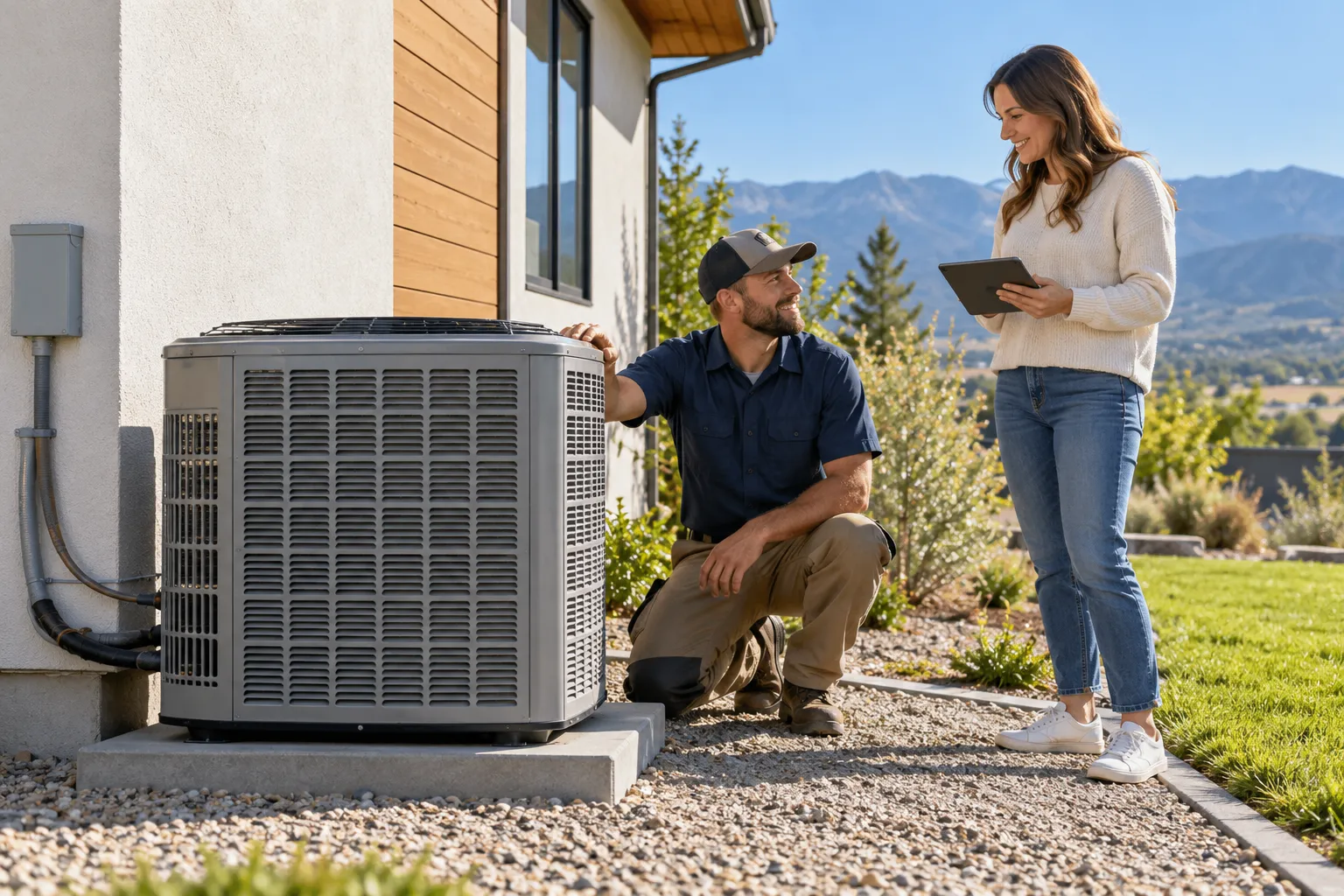
An old air conditioner rarely quits at a good time. It limps along, runs up your bills, and then fails in the first real heat wave. Fighterspost Heating & Air helps you get ahead of that. We sort out whether you need a repair or a full swap, then connect you with an independent provider in our network.
The provider handles the sizing, the install, and the startup. Fighterspost Heating & Air does not do the work. Our job is to make the first step simple. Tell us about your home, request an estimate, and compare what you get in writing before you agree to anything. There is no obligation to move forward.
Start with a simple question. Is this a repair or a replacement? A single bad part on a young system is a repair. A tired system with a pile of repairs behind it is usually a swap.
A rough rule many homeowners use: multiply the system's age by the repair quote. If the number is above about $5,000, a new system often makes more sense. It is not a law, but it is a handy gut check.
Walk out to the unit and look around. Then walk the house. Here is what to watch for:
If the unit has quit in a heat wave, ask the provider about emergency AC repair first. Sometimes a quick fix buys you time to plan a proper replacement.
Timing matters. In the dry, high-sun climate around the Eagle Mountain area, air conditioners work hard from late spring through early fall. Intense sun and dry air load the system with heat and dust.
The smart move is to plan the swap in spring or fall. Providers tend to be less booked then, and you are not sweating through the wait. Waiting until the first hot week can mean a longer line and rushed choices.
Hail is the other season worry. A hailstorm can bend the fins on the outdoor unit. Take photos, and ask the provider to help document the damage. Some policies may cover sudden damage, so check your policy.
There are a few common setups. Which one fits depends on your house.
This is the classic. An outdoor condenser pairs with an indoor coil and uses your existing ducts. Newer frame homes with solid ductwork usually do well with this.
A heat pump cools in summer and heats in winter. It is a popular choice for heating and cooling in one unit. In places with heavy snow and deep cold, ask the provider how it performs and whether you need a backup heat source.
No ducts needed. Good for additions, finished basements, or rooms that never cool well. Each indoor head serves its own zone.
Bigger is not better. An oversized unit cools fast, shuts off, and leaves the air damp and clammy. It also wears out sooner.
A unit that is too small runs all day and never catches up. A good provider runs a load calculation. That looks at your square footage, windows, insulation, sun exposure, and ducts. Be wary of anyone who sizes by simply copying your old unit.
Basement-heavy homes and stucco or wood exteriors all change the math. Tell the provider about them.
A full job is more than setting a box on a pad. Expect the provider to cover most of this:
What can you do yourself? Clear plants and debris from around the outdoor unit. Move stored items away from the indoor equipment. Make a path to the work area. Leave the electrical, refrigerant, and gas work to the pro.
The indoor and outdoor parts should work as a pair. A new condenser hooked to an old coil can lose efficiency or cause early failure. Ask the provider if a full matched set makes sense for your home.
If your furnace is also old, it is worth asking about it. Some homeowners search for furnace replacement near me and do both jobs in one visit to save on labor. Ask for each job priced separately so you can compare.
You will see a number called SEER2. Higher means the unit uses less power to cool. A higher number often costs more up front, then pays you back on the power bill over time.
How much it pays back depends on how long you run the AC. In a dry, sunny climate with long cooling seasons, efficiency tends to matter more. Ask the provider to show a simple comparison of two options.
Bring a short list. Good providers are happy to answer.
Quote in writing, always. It should list the equipment, the work, and the total. Get at least two so you can compare line by line.
Before you request anything, do a quick check. Make sure the thermostat has fresh batteries. Check the breaker. Swap a dirty filter. If the unit still fails, a provider can tell you whether it is a repair or a replacement. Request a callback to check provider availability in your area.
The provider measures your home's cooling needs so the new unit is not too big or too small.
Your old system and its refrigerant are removed and handled the right way.
Pad, coil, lines, wiring, and drain are installed and connected to your system.
Airflow, charge, and thermostat are tested before the provider leaves the job.
Prices depend on size, brand, efficiency, and how much of your ductwork needs work. These are typical U.S. ranges only. Always get a written quote before you agree to a job.
| Item | Typical range | Notes |
|---|---|---|
| Central AC replacement | $5,000 – $12,000 | Varies by size and efficiency rating |
| Condenser-only swap | $2,500 – $6,000 | Only works if the indoor coil matches |
| Heat pump system | $5,500 – $14,000 | Cools and heats; cold climates may need backup |
| Ductless mini-split | $3,000 – $7,000 | Per zone; more heads cost more |
| Ductwork repair or changes | $500 – $5,000 | Depends on leaks and layout |
| Permit and haul-away | $100 – $800 | Varies by local rules and provider |
Share your home size, system age, and what is going wrong. Takes just a couple of minutes.
Fighterspost Heating & Air connects you with an independent provider in our network near Eagle Mountain.
Check the equipment, the work, and the total. Ask questions before you agree.
Pick a time that works. The provider handles the sizing, setup, and testing.
We explain your options in simple words, and you decide when you are ready to move.
You are matched with local pros who do the work themselves.
We help you plan the swap before the heat or after the rush.
Compare clear, itemized numbers so you know what you are paying for.
Tell us what your system is doing. Send a request through the form, or email contact@fighterspost.living, and we will point you to a provider in our network.
No obligationMost central air conditioners last about 12 to 15 years. Dry air, heavy sun, and poor upkeep can shorten that, so regular filter changes and tune-ups help.
If the unit is over 12 years old, uses older refrigerant, or needs repeated repairs, replacement often makes more sense. A provider can compare both options in a written quote so you can decide.
Many full replacements take one day, but ductwork changes or new electrical can add time. Ask the provider for a schedule and get the details in your written quote.
Tell us what your system is doing. Send a request through the form, or email contact@fighterspost.living, and we will point you to a provider in our network.
No obligation