Need furnace repair services in Eagle Mountain?
Tell us what your system is doing. Send a request through the form, or email contact@fighterspost.living, and we will point you to a provider in our network.
No obligationRequest an estimate today
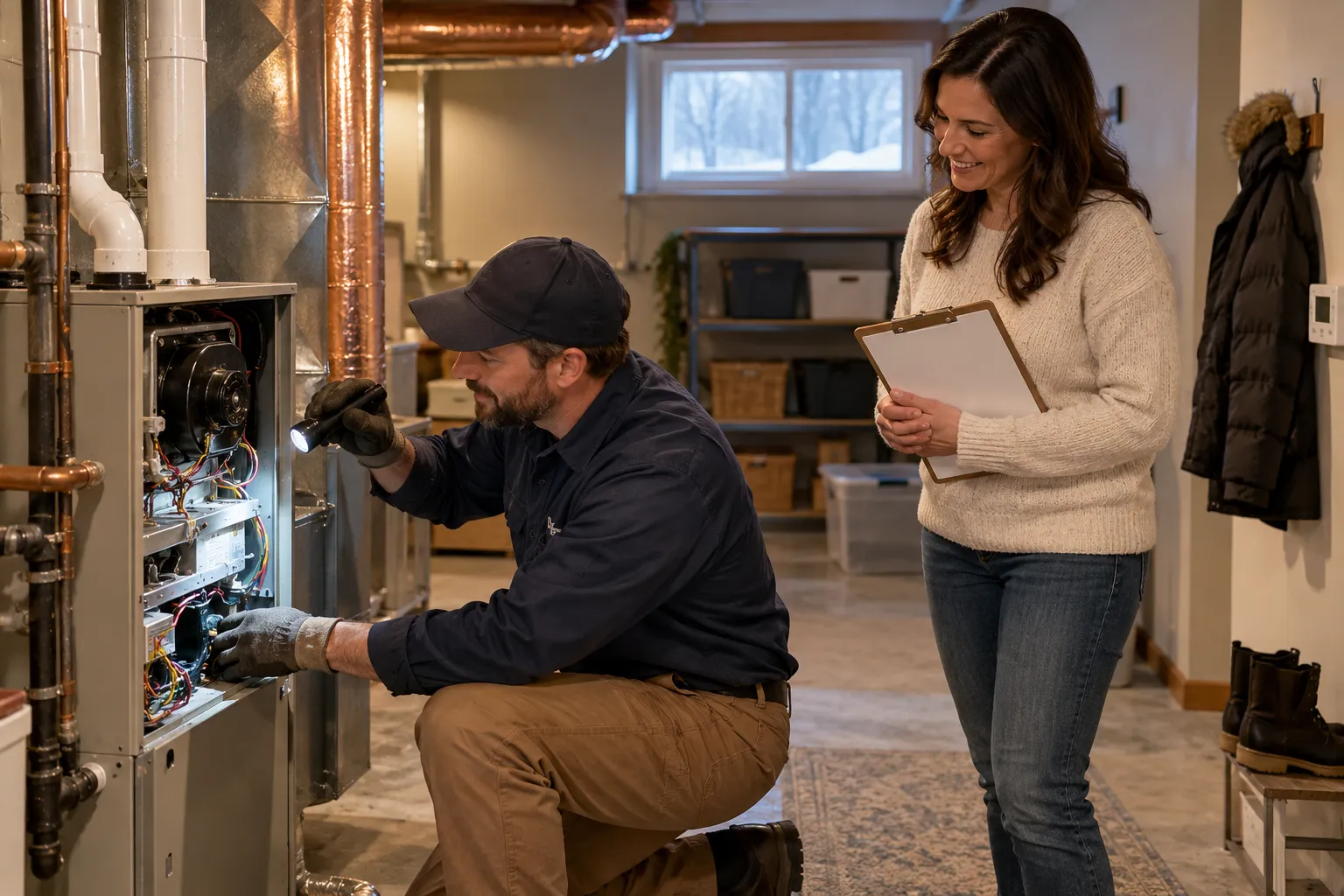
A furnace that fails in cold weather is stressful. Fighterspost Heating & Air is a referral service. We do not repair furnaces. We help you sort the problem, share what is safe to check at home, and connect you with an independent provider in our network.
Here in the Eagle Mountain area, winters bring heavy snow, hard cold snaps, and dry air that wears on parts. A furnace that ran fine in fall can fail on the first freezing night. This page walks you through gas safety first, then simple checks, then common repairs and costs. When a job needs a pro, request an estimate and ask for a written quote before work starts. The provider handles the repair. You stay in charge of the decision.
A rotten-egg smell means leave the house. Do not flip light switches. Do not run the furnace. Do not use a lighter or a phone inside.
Once you are outside, contact your gas utility or the local emergency number. Do not try to relight anything. A provider can look at the furnace only after the utility says the home is safe.
Headaches, dizziness, nausea, or a detector alarm can point to carbon monoxide. Get everyone outside into fresh air first. Then get help.
Test your detector batteries when the clocks change. Soot streaks near the furnace or a yellow, flickering burner flame are also signs to stop and have a provider inspect it.
A furnace sits quiet for months. Then the first hard freeze hits and it runs nonstop. Weak parts fail right then.
Heavy snow, fast temperature swings, and dry air all add stress. Many local homes are newer frame builds with furnaces in basements, where dust collects fast. Fall is the calm window to get it looked at. Midwinter is when everyone else is calling.
Check, then call. These steps take ten minutes and need only a flashlight:
A clogged filter chokes airflow. The furnace overheats and shuts itself off. Slide the old filter out, hold it to the light, and replace it if you cannot see through it. Match the size printed on the frame.
High-efficiency furnaces vent through pipes on an outside wall. Drifting snow or fast melt and refreeze can block them. Gently clear the area with a broom. Do not chip at the pipes.
Stay out of the burner area, gas valve, wiring, and heat exchanger. Those are provider jobs. If the furnace still will not start after one reset, stop. Repeated resets can hide a real fault.
Watch for these:
Most no-heat calls come down to a small list of parts.
The igniter lights the burner. The flame sensor tells the furnace the fire is on. A dirty sensor makes the burner shut off after a few seconds. Providers often clean or replace these in one visit.
The blower pushes warm air through your ducts. A weak capacitor can keep it from starting. A worn motor may hum, squeal, or stop. The capacitor is a smaller fix. The motor costs more.
This part keeps combustion gases apart from your home air. A crack is a safety issue. A provider can confirm it. Because the fix is costly, it often starts the repair-or-replace talk.
The provider asks about symptoms, then checks the thermostat, filter, and airflow. Next come the igniter, sensor, burner, and venting. They test safety controls and look for gas or exhaust leaks.
You should get a clear explanation of what failed and the cost to fix it, in writing, before any part is swapped. If you are unsure, ask them to show you the part.
Age matters. Many furnaces last about 15 to 20 years. Think about replacement if yours is near that range, needs repeated fixes, or has a cracked heat exchanger.
Replacement is its own project with its own sizing and pricing, so ask the provider to explain it in detail.
The part, the model, and how hard it is to reach all matter. A tight basement closet takes longer than an open utility room. Older units may need parts that are harder to find.
Cold weeks can also be busy, which affects scheduling. Quote in writing, every time.
Request a callback to check provider availability in your area.
Book a tune-up in early fall. Replace the filter, clear the area around the unit, and test your detectors. Heating and cooling systems share ducts and filters, so one HVAC service visit can cover both. A little prep now means fewer cold surprises later.
A provider checks the burner, venting, and safety controls so heat is not only back but also safe to run.
The provider tracks down why the furnace stopped, instead of guessing at parts.
You get the repair cost on paper before work begins, so nothing surprises you later.
If the fix is large, the provider can lay out repair and replacement choices so you can compare them.
Furnace repair prices in the U.S. vary by part, model, and access to the unit. These ranges are typical only. Always get a written quote before any work starts.
| Repair item | Typical range | Notes |
|---|---|---|
| Diagnostic visit | $75 – $200 | Often applied toward the repair if you proceed |
| Flame sensor or igniter | $100 – $400 | Common cause of no-heat calls |
| Capacitor | $150 – $450 | Small part, quick fix on many units |
| Blower motor | $400 – $1,500 | Cost depends on motor type and model |
| Control board | $300 – $900 | Varies by brand and age of furnace |
| Heat exchanger | $1,500 – $3,500 | Often leads to a replacement conversation |
If you smell gas or a carbon monoxide alarm sounds, step outside first and contact the right emergency service.
Look at the thermostat, filter, breaker, and outside vents. These are safe for most homeowners.
Tell us what the furnace is doing and where you are located.
Compare the quote with your needs, ask questions, and approve the work you want.
Simple home checks can fix small problems, and they help the provider diagnose bigger ones faster.
Providers in our network are independent local businesses that do the actual repair work.
We explain what drives costs so a written quote makes sense to you.
Request an estimate and decide on your own schedule with no pressure.
Tell us what your system is doing. Send a request through the form, or email contact@fighterspost.living, and we will point you to a provider in our network.
No obligationStart with a clogged filter, a closed vent, or a thermostat set wrong. If those are fine, a dirty flame sensor, weak igniter, or failing blower may be to blame. A provider can test each part.
Many repairs run from about $100 for small parts to $1,500 or more for a motor. Costs vary by job, so ask the provider for a written quote first.
If the furnace is 15 to 20 years old and needs frequent fixes, compare both options. A provider can quote repair and replacement side by side so you can decide.
Tell us what your system is doing. Send a request through the form, or email contact@fighterspost.living, and we will point you to a provider in our network.
No obligation